Newgate Systems

Case study · Connected product

Product

A home battery needs an app before it ships.

Meter is a US start-up building a home battery made in the United States, sold to homeowners through utilities and installers.
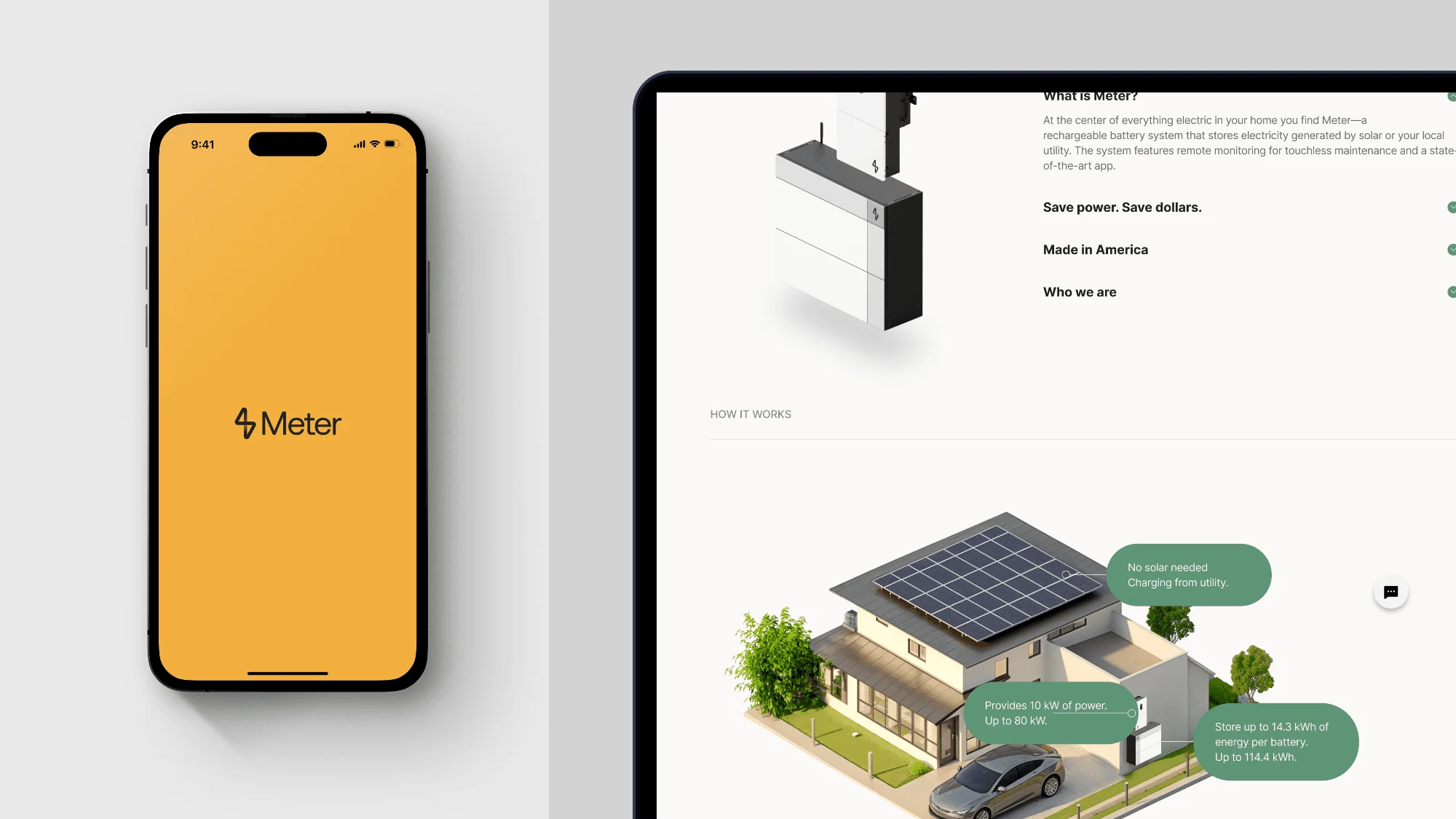
The Meter app on a phone beside the Meter website
Client context
Meter is a US clean-tech start-up launching a home battery made in the United States.
The problem
A new hardware company had to launch with a mobile app for owners, a website for buyers, utilities and installers, and a way for a homeowner to work out how many batteries they need.
What Newgate owned
The whole build: the MeterHome mobile app as a hybrid app, the product website and its battery sizing calculator, with the planning and architecture behind them. Passage Studio was the design partner. Meter owned the battery, its firmware and the business.
What went live
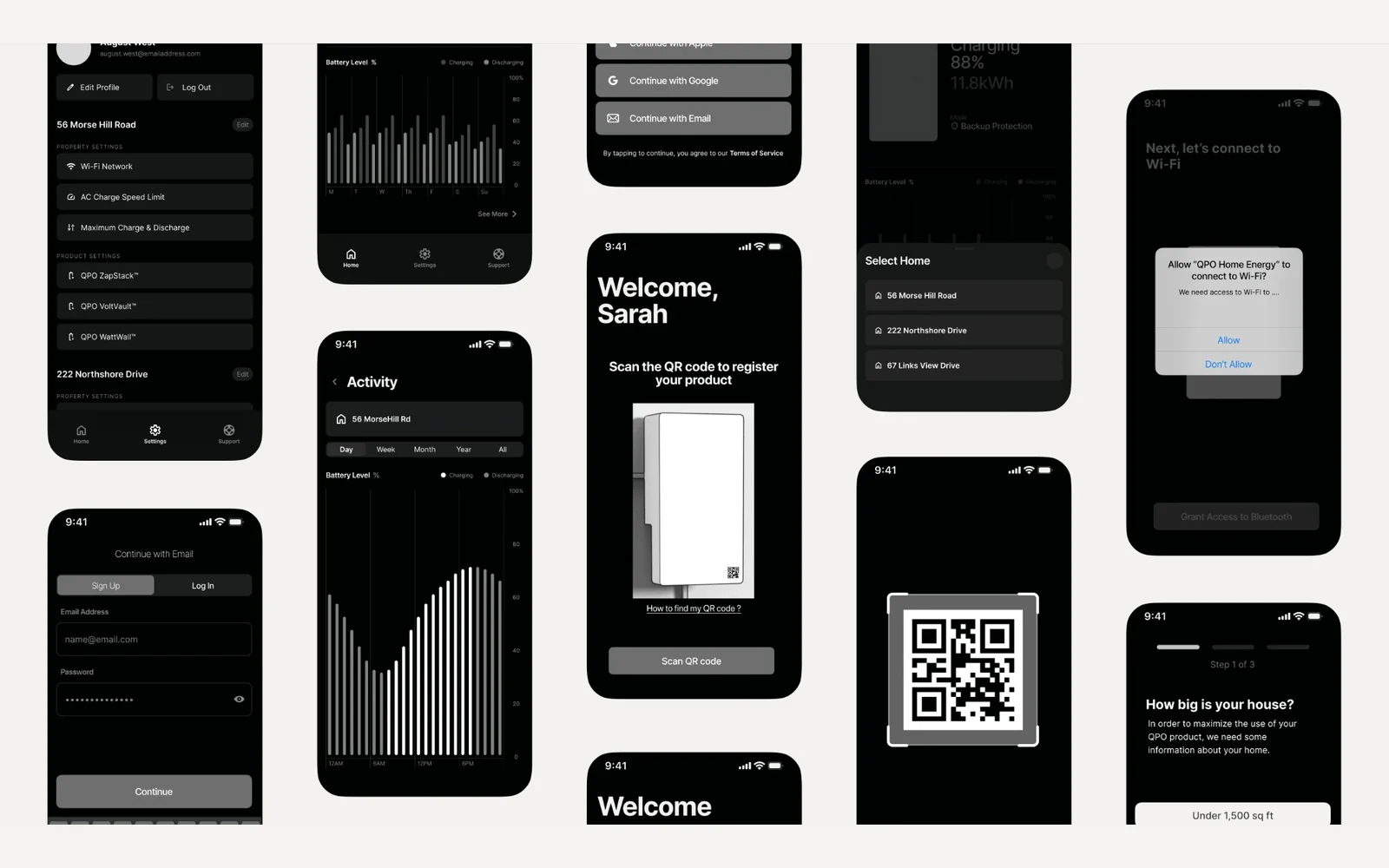
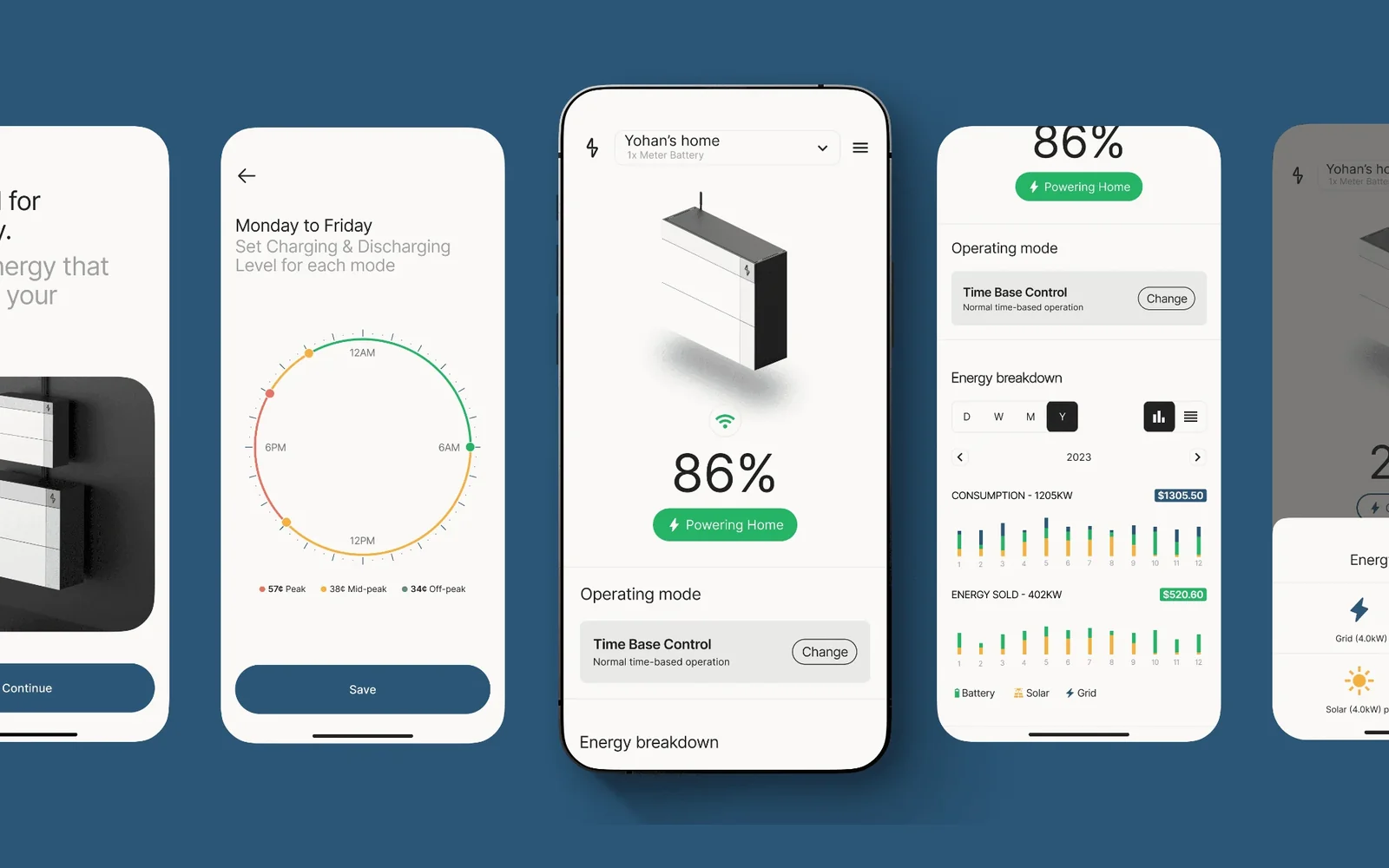
The MeterHome app for homeowners and installers: battery charge and status, energy flow, operating modes, charging and discharging schedules, time-of-use rates, charge limits, activity history, several homes per account and QR registration of a new battery. Alongside it, the original meterhome.com site and its sizing calculator.
What followed
The app launched on iOS in November 2024 and has had further releases since. meterhome.com now redirects to Meter’s newer site.
Client
Meter
Industry
Clean tech, home energy storage
Region
United States
Platform
Hybrid mobile app (iOS, Android), web
Credits
Design by Passage Studio, engineering by Newgate Systems

01

The client

Home batteries are mostly sold on specifications and look like utility equipment. Meter set out to make one that belongs in a home, and to build it in the US. As a new company it had no brand, no app and no website when the product work began.

02

The problem

A battery owner expects to see and manage their energy from a phone. A buyer needs to know what setup their house requires before talking to an installer. Utilities and installers need a place to learn the product. All three had to exist at launch, and all three had to agree with each other.

03

Requirements

  • R1A mobile app for battery owners
  • R2A product website for homeowners
  • R3A resource section for utility providers and installers
  • R4A calculator that sizes a battery setup for a given home
  • R5App, website and product telling the same story

04

The solution

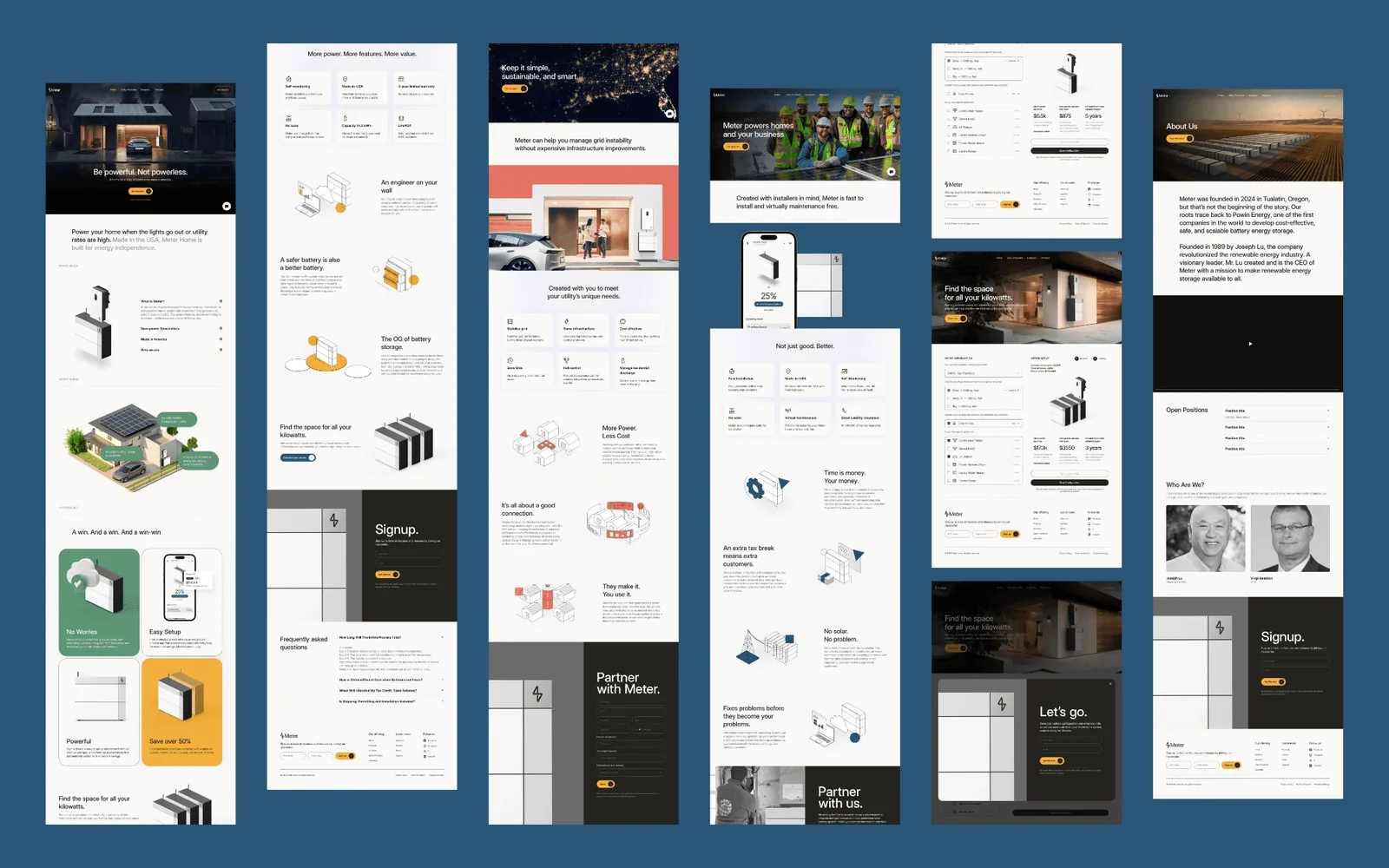
We planned the architecture first, then built the app and the website from Passage Studio’s designs. The app has two paths: an installer sets up a battery, scans its QR code and configures modes and rates; a homeowner signs in, connects the system and manages it from then on. The website carries the product story, sections for utilities and installers, and the calculator.

Why the calculator matters: it turns a product page into a first sizing conversation, which is the step a homeowner otherwise needs an installer for.

05

The work

  • 01Mobile app. Hybrid app for iOS and Android with installer and homeowner flows.
  • 02Monitoring. Battery charge, energy flow and activity by day, week, month and year.
  • 03Control. Operating modes, charging and discharging schedules, time-of-use rates and charge limits.
  • 04Set-up. QR registration, Wi-Fi and Bluetooth connection, and several homes per account.
  • 05Website. Product and brand site, with sections for utilities and installers.
  • 06Sizing calculator. A custom tool that recommends a Meter setup for a home.
Hybrid appiOSAndroidWebCalculatorConnected hardware

06

Outcome

App, site and calculator

Live for the product launch

Two paths

Installer set-up and homeowner management in one app

Screens
More product work

Other records.

Next

Facing something like this?